


ispace-U.S. mission schedule updated due to engine development delays & model update
Tokyo–March 27, 2026 – ispace, inc., a global lunar exploration company, announced today ULTRA, its newest lunar lander model integrating the APEX 1.0 lander and the Series 3 lander, each of which had been in development in parallel at the company’s Japanese and U.S. entities.
The ULTRA lunar lander, which will include a new engine—a change from the previous vendor—will be used in each of ispace’s next missions, resulting in a mission shift and schedule update for ispace-U.S.’s first mission, now expected in 2030. As this mission was selected for NASA’s Commercial Lunar Payload Services (CLPS) task order CP-12 as part of Team Draper, the execution of CP-12 under the revised schedule is pending approval by NASA. ispace’s next lunar landing mission is planned to launch in 2028.
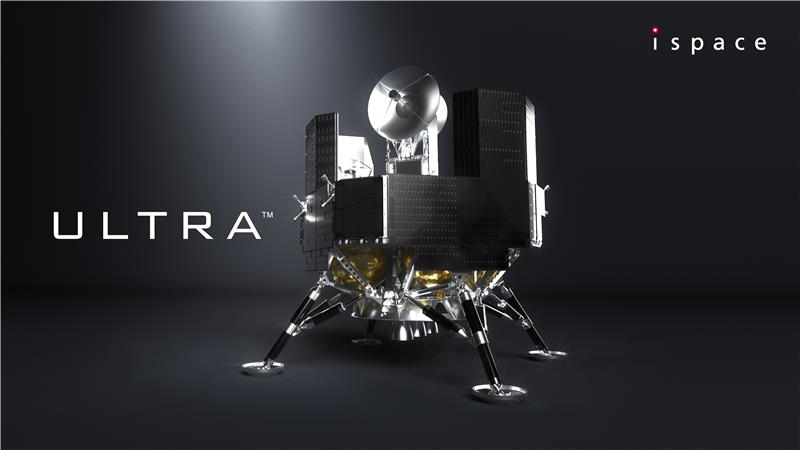
The new ULTRA lander derives its name from the Latin word “ultra,” meaning “beyond.” Building upon the lander model “RESILIENCE,” used for ispace’s two previous lunar missions, ULTRA is based on the current Series-3 lander currently in development. By combining the outstanding features of the APEX 1.0 currently under development by ispace-U.S., the new model is expected to deliver even higher quality.
The announcement was made by Takeshi Hakamada, Founder & CEO of ispace, along with ispace executives at a business strategy update in Tokyo.
Engine Change
ispace-U.S. has been developing the APEX 1.0 lander for Mission 3 (Draper Commercial Mission 1), which was selected as part of Team Draper, to deliver NASA’s Commercial Lunar Payload Service (CLPS) Task Order CP-12, with the goal of launching in 2027. Development of the new VoidRunner engine to be installed on this lander has been underway; however, as previously announced, Agile Space Industries has reported delays in demonstrating the engine efficiency required to meet performance specifications.
After closely monitoring the engine’s status and conducting careful review, ispace has determined that a change in the development plan to incorporate a new alternative engine is necessary to ensure the successful execution of the lunar landing mission.
The new engine, which will replace VoidRunner, has already been developed by the alternative supplier and has a proven track record of operation in past lunar missions. Given its compatibility with the new ULTRA model compared to APEX 1.0, it will serve as the engine for ULTRA in each of the future missions.
Higher Mission Quality and Efficiency
Interest in lunar missions is rapidly growing worldwide, particularly in the United States and Japan. In the U.S., the Trump administration has issued an executive order accelerating lunar development with the goal of constructing a lunar base and a lunar nuclear reactor by 2030. In Japan, discussions are underway regarding the increasing importance of cooperation with the U.S. Amid these circumstances, expectations for mission quality and efficiency from customers, primarily national space agencies and private companies are also rising.
Up until this point, ispace has been developing two lunar lander models in parallel in Japan and the U.S., sharing know-how gained from its two previous lunar missions, such as standardizing engine procurement and software development.
In order to meet these expectations, ispace is integrating the two landers that were being developed in parallel at its Japanese and U.S. entities into a unified new, high-quality lunar lander named ULTRA as its next commercial lander.
Mission Schedule Shift
The current ispace-U.S. Mission 3 (Draper Commercial Mission 1) was selected to carry NASA’s CLPS Task Order CP-12 as a member of Team Draper. As a result of today’s updates, including the replacement of the engine and the transition from APEX 1.0 to the integrated model ULTRA, ispace-U.S. has updated its first U.S. mission to 2030.
ispace-U.S. has proposed the updated task plan for CP-12 following careful discussions and agreement with its primary Mission 3 customer Draper, which is pending NASA approval. ispace and Draper are confident that the revised Mission 3 and CP-12 will provide an opportunity to fully leverage the technical and operational track record gained through ispace’s two previous lunar landing missions, and that this has been evaluated by ispace and Draper to be beneficial for the NASA task order. Amendments to the transport contracts with other Mission 3 customers are necessary and will also be revised and updated.
Updated Mission Schedule
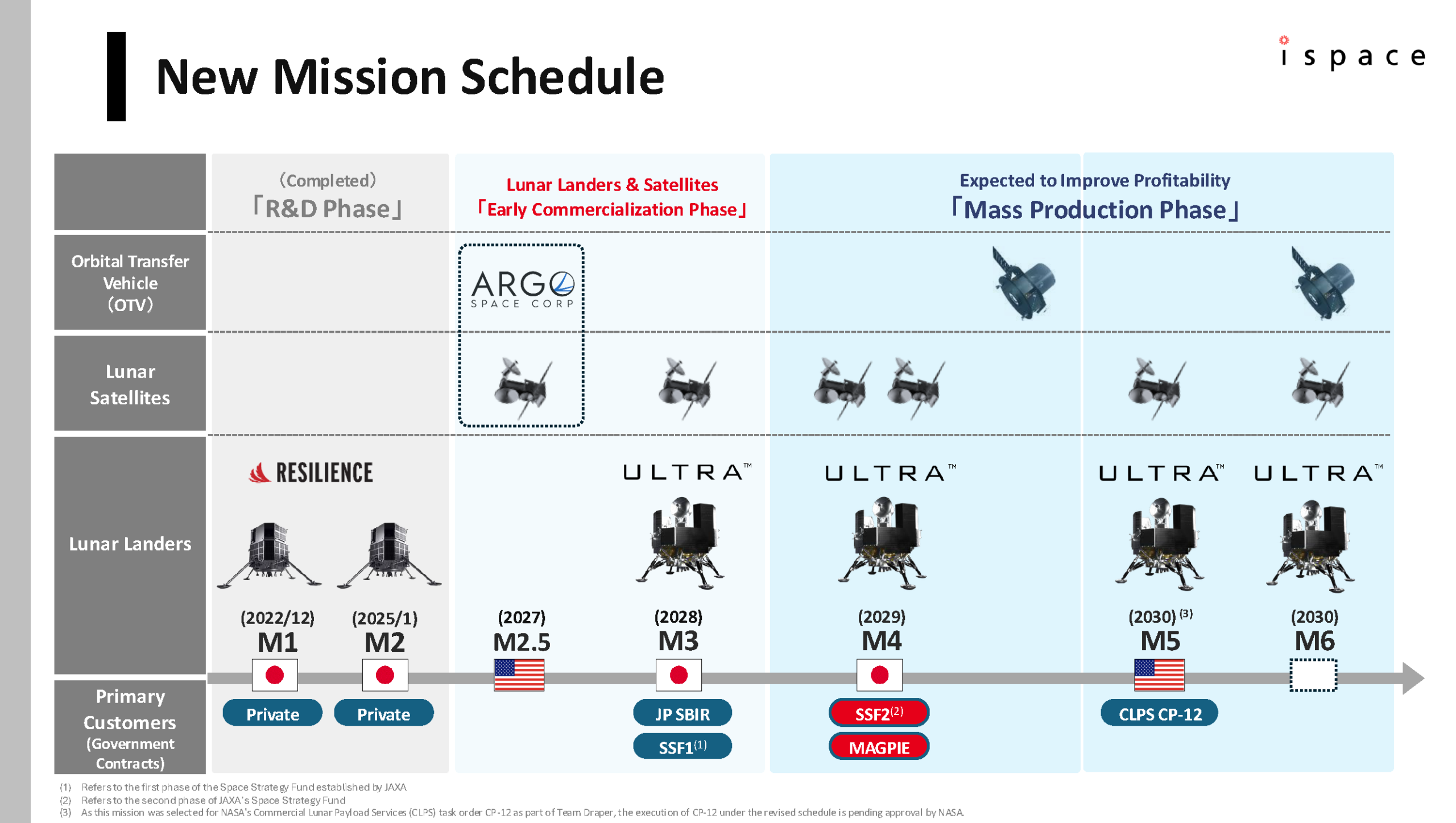
Additionally, considering the proposed schedule change for the ispace-U.S. mission and the introduction of the new ULTRA model, ispace is revising its planned mid-term mission schedule and mission numbers.
- Mission 3: Lunar Lander launch, 2028 (formerly Mission 4)
This mission is currently under development by ispace Japan funded through a Small Business Innovation Research (SBIR) grant from Japan’s Ministry of Economy, Trade and Industry (METI). The mission is currently scheduled for launch in 2028.
- Mission 4: Lunar Lander launch, 2029 (formerly Mission 6)
Development for this mission has officially begun following the selection of the project, “High-Precision Landing Technology in the Lunar Poles,” by Japan’s Space Strategy Fund, Second Phase. This mission is currently scheduled for launch in 2029.
- Mission 5: Lunar Lander launch, 2030 (formerly ispace-U.S. Mission 3)
This mission is being developed by ispace-U.S. as part of Team Draper (Commercial Mission 1) and has been selected to carry NASA’s CLPS Task Order CP-12 (pending NASA approval). This mission’s proposed scheduled launch is 2030.
New
- Mission 2.5: Lunar Orbit Satellite Launch, as early as 2027 (New)
Based on its mission heritage, ispace is entering the market with a new Lunar Connect Service which provides communications and positioning services by using lunar orbit transport technology. The business plan calls for launch of at least five of its lunar orbit satellites by 2030. As a first step, ispace has reached an agreement with U.S.-based Argo Space Corp., for a delivery of a satellite to lunar orbit using an in-space transportation vehicle. ispace aims to place the satellites into lunar orbit and commence communication services as early as 2027.
In order to maximize lander performance through the development of the global unified lander ULTRA, ispace is implementing organizational structural reforms to the current development framework, currently organized separately at both the Japan and U.S. entities. As part of these reforms, staffing levels and personnel assignments at both entities will be progressively optimized with the aim of reducing company-wide costs.
Specifically, the development groups responsible for the pre-manufacturing stages of lander production, which previously reported to the CEOs of the Japan and U.S. entities respectively, will be consolidated into a unified global development unit, directly reporting to CTO Ryo Ujiie. To maximize the benefits of this unit, a global project management function will be established to strengthen control over development budgets and schedules. Concurrently, R&D functions for cutting-edge technologies and global procurement functions from suppliers worldwide will be unified.
Alternatively, to continue responding with maximum flexibility to the needs of major customers in each country, groups responsible for Assembly, Integration and Testing (AIT) at locations in both Japan and the United States will be established. At the same time, in response to recommendations to expand testing capabilities from the external review task force ispace will establish testing personnel groups at both our Japanese and U.S. locations. Furthermore, mission control center and mission operations functions will remain at each of the three global locations and maintained as a backup system, thereby strengthening coordination among locations.
# # #
About ispace, inc. (https://ispace-inc.com)
ispace, a global lunar resource development company with the vision, “Expand our planet. Expand our future.”, specializes in designing and building lunar landers and rovers. ispace aims to extend the sphere of human life into space and create a sustainable world by providing high-frequency, low-cost transportation services to the Moon. The company has business entities in Japan, Luxembourg, and the United States with more than 300 employees worldwide. For more information, visit: www.ispace-inc.com and follow us on X: @ispace_inc.